Aligning the Engine Parts: Transparency and Synchronization in the Linux BU
The engine
I remember that, since I was very young, I have always felt a special fascination for engines, precise mechanics, and aerodynamic design. I am amazed by the concept of getting hundreds of independent parts, metallic, electronic, wooden or plastic, to work in such perfect synchrony that everything flows without friction. Frictionless. For someone like me, who is passionate about technology but values people above all else, it is inevitable to look for analogies between that devotion to well-built machines and the daily work in technology management.
Sometimes, running the Linux Business Unit (BU) at SUSE is quite a bit like keeping a high-performance engine tuned up. For a platform like SUSE Linux Enterprise to run with the stability and reliability our customers demand for projects that will last 10 or 16 years, having the best source code is not enough. It requires, above all, a perfectly oiled and aligned human machinery behind it.
The plane
Think, for a moment, about the legendary Lockheed SR-71 Blackbird. It’s an amazing piece of engineering. Its design reached a point where it had to be driven primarily by the immense heat each part of the structure would endure at Mach 3.3. Thermodynamics can blow your head. To make it fly, they had to transform their entire working method to adapt to the use of titanium, creating technology and an industry that didn’t even exist yet. They succeeded not just because they had brilliant engineers, but because every single team member—from those sourcing materials to those designing the airframe—was perfectly aligned on overcoming an impossible challenge. (Please read the book “Blackbird Rising” to enjoy more about it.)
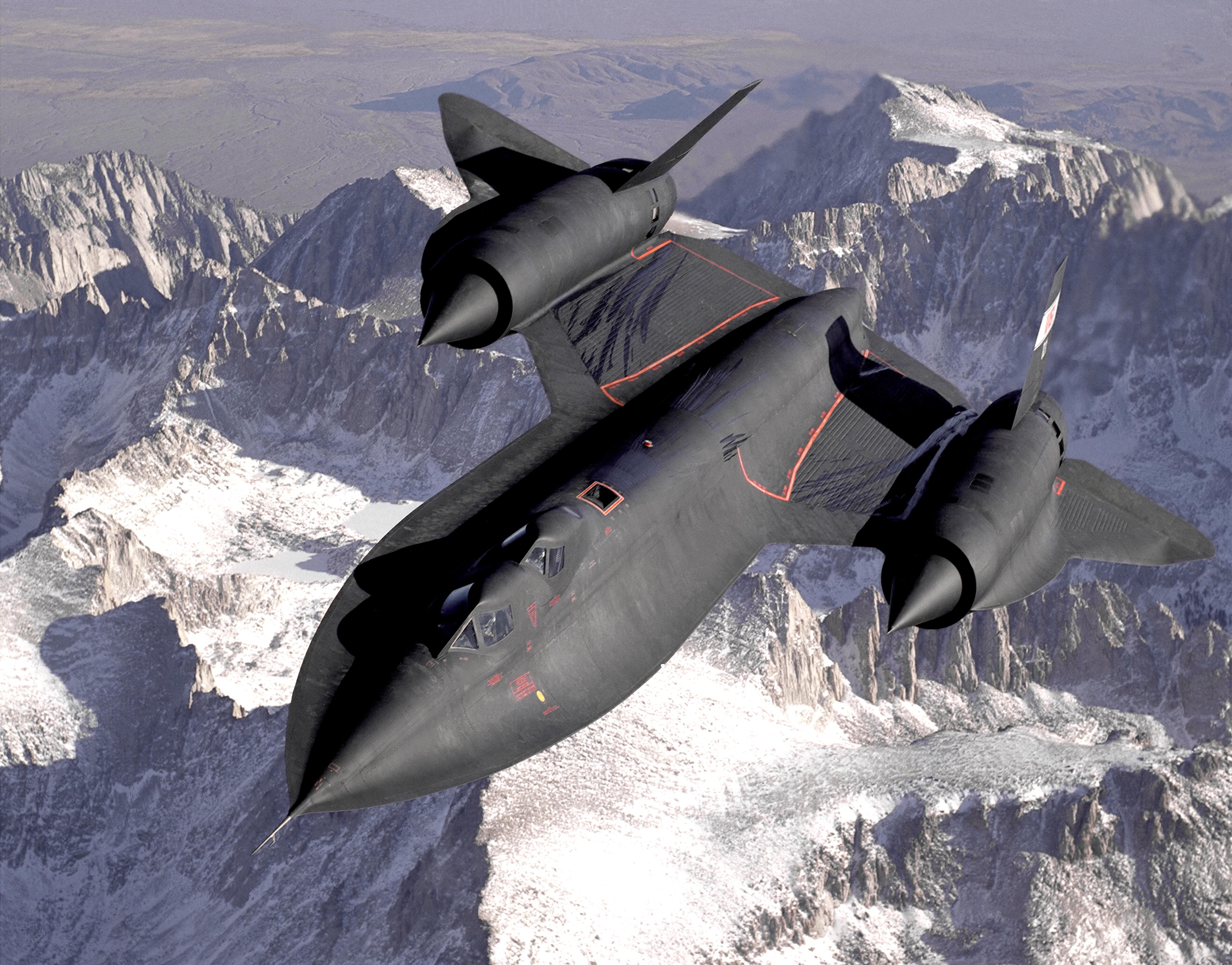 Photo: USAF / Public Domain via Wikimedia Commons
Bringing it all together
Our challenges in the enterprise software world might not involve titanium or Mach 3 speeds, but the need for that level of alignment is exactly the same. The great challenge in a global organization is usually not the lack of talent or good ideas, but the risk of fragmentation. In our day-to-day work, we find ourselves at the intersection where product management, pure engineering, alliances with hardware giants like Lenovo, Fujitsu, or NVIDIA, and the sales and legal teams cross paths. That’s the beauty of Product Management, we are right in the middle of it.
Each department looks at reality from its own perspective: Sales needs agile responses to market demands; Engineering takes care of technical elegance and, in our case is part of the upstream community; Legal evaluates risks; and Product seeks to maintain the consistency of the long-term roadmap. It is a complex ecosystem where every component is vital, yet inherently prone to pulling in slightly different directions.
If these gears do not turn at the same pace, the machinery creaks. Looping arguments arise about what constitutes a fully supported solution versus a one-off effort. We risk treating critical infrastructure projects as best-effort exercises rather than fully supported products, or we risk sending mixed messages to the market regarding what we actually deliver. That is why transparency and interdepartmental alignment are not, for me, mere words from a corporate manual; they are the very structure that supports the entire project. They are the titanium airframe that keeps the BU from melting under the pressure of market demands.
Connecting the dots
A clear example of how we build this alignment is what we experience at the SUSE day @ SAP or the Technical Review Forum (TRF). I recently had the opportunity to participate by giving the welcoming message and introducing our Linux portfolio at our 2026 SUSE Day @ SAP and at our first TRF of the year. These cross-functional forums are essential. It is not about imposing a top-down vision, but about creating the right framework so that engineers, product managers, and alliance leaders can share context, discuss objections openly, and leave the room with a unified direction. It is the place where we ensure the engine and the aerodynamics are working together.
But alignment isn’t just about big meetings; it is also cultivated in the details of the day-to-day. It’s in the adoption of AI tools, like Gemini or MCP, to automate documentation and ensure that everyone has access to the same information. It is in the clear communication of constraints, like ensuring everyone understands that the SLES LTS Core platform is not limited to x86_64 architecture, preventing misinterpretations down the line.
Crucially, it is also in the mutual respect for asynchronous working times and the well-being of each collaborator. We cannot build a sustainable, long-term product if the people building it are burning out. Fostering an environment where global teams can collaborate effectively while maintaining their personal well-being is a core part of keeping the machinery running smoothly.
Breaking records
In the end, the software we deliver is nothing more than a mirror of how we function as a group. When we replace silos with transparency and doubts with synchrony, we get the whole engine pushing hard towards the same goal. This is how solid solutions are built that customers and partners can rely on for the next decade. Just like the SR-71 broke records through unprecedented collaboration and innovation, we can deliver the next generation of enterprise Linux, breaking speed records too, by ensuring every part of our team is moving in the exact same direction.
Cheers and safe travels!